Wednesday, August 31, 2022

They Can Still Shave Your Head And Bring You Back


 RETIRED NAVY AND MARINE CORPS - BECOMING “UNRETIRED:” RECALL TO ACTIVE DUTY

You can be recalled to active duty anytime the service wants you. For this reason, military officials often refer to military retirement/retainer pay as “reduced pay for reduced services.”

Department of Defense (DOD) Directive 1352.1 places retirees into one of three categories, with Category I the most likely to be recalled during times of war, national emergency, or “needs of the service”:

  • Category I: Nondisabled military retirees under age 60 who have been retired less than five years.

  • Category II: Nondisabled military retirees under age 60 who have been retired five years or more.

  • Category III: Military retirees, age 60 or older, and those retired for disability.

Military retired members of any age can be recalled to active duty to face court-martial charges. However, that this does not happen very often. In most cases, the military allows the civilian justice system to process military retirees who engage in misconduct.

_______

Many of the retired Marines I know would be glad to go back on active duty if the country needed us. Although if the country needs us at our advanced age we and our country are in deep doo doo.

Semper Fi


Saturday, August 20, 2022

C-130


C-130 Hercules

The C-130 Hercules is a heavy hauler. It was brought into service in 1956 and continues to be updated and used. It is extremely rugged and can be used on poorly maintained airfields.

My first ride on a C-130 was in 1967. We loaded our big trucks and HAWK missiles in Yuma, Arizona, and flew 15 minutes to El Centro, California, just to practice loading and unloading our equipment on the aircraft.

I flew them a number of times in Vietnam and to Okinawa, and the head was just as shown, with no curtain, open to view. A nice Vietnamese lady used the facility, looking back at us and laughing and flirting.

Our Marine C-130 Squadron, VMGR-234, was located at the Glenview Naval Air Station north of Chicago. We would load our radio jeeps and fly around the country, setting up communication shots and working with other units. We flew to Boston, New Orlean, Florida, 29 Palms, Wisconsin, LA, and San Francisco for long weekends.

We also used the C-130 as an air control agency, with an air control van placed in the aircraft. It was very effective during an attack. And the C-130 could be used as a gun platform firing a 105 mm howitzer and other weapons.

I took a hop from Glenview to Hawaii in 1982.  One way it took two days because of high winds, the other time it made it nonstop.  13 hours, I think, a long time to spend in a loud aircraft.


When the Gulf War broke out our Commanding Officer took a 130 and went to the west coast, then Hawaii, Japan, and then Thailand, carrying cargo all the way.  He took along my friend and Squadron mate. He was going to take me as well, but then got nervous about two Colonels on a boondoggle to war.

After he got to Thailand he said, hey, we are halfway around the world, so they kept going west. They got to Saudi Arabia just as the war was breaking out, so they hauled equipment around for the next week.  My friend called me up at 2 am to tell me he was at the war, and I was not.  He spent 96 flight hours in the airplane and slept in a hammock.


                                                       The facilities are a bit primitive

Beth and I took a C-130 from Ramstein, Germany to Siganella, Sicily.  Beth told me she needed to use the washroom, and I was a bit concerned, but they had the nice curtain erected for privacy.


The pilot was taking his wife and young daughter to Sicily.  She thought it would be the beach and sun, but it was cold. The pilot and I went into town to get rental cars. His license was a week out of date, so we took his family around for that night and the next day. 

The C-130 is slow so it is not our favored plane for space A, but if nothing else is flying we take it.

Video: 

 More Info: 

https://www.globalsecurity.org/military/agency/usmc/vmgr-234.htm

https://en.wikipedia.org/wiki/Lockheed_C-130_Hercules


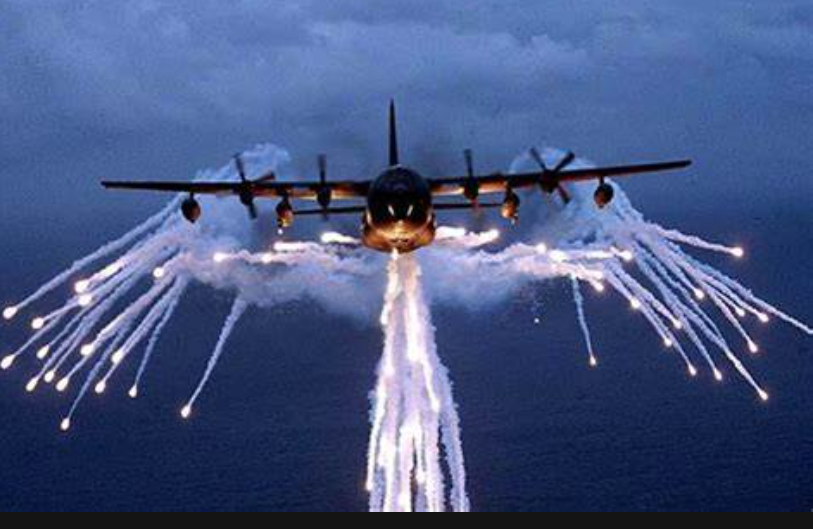
 Putting out a anti missile flares


Beth and Craig flying Space Available


Thursday, August 18, 2022

C-130 Landing in Bagdad


Forwarded for your amusement - some very descriptive lines. This guy must have taken a creative writing class in college. C-130 Pilot's Description of Approach into Baghdad. This is a funny story particularly if you like mixed metaphors!!

Thanks to Byron Hill For Sharing
-------------------------------------

There I was at six thousand feet over central Iraq , two hundred eighty knots and we're dropping fast. It's a typical September evening in the Persian Gulf; hotter than a rectal thermometer and I'm sweating like a priest at a Cub Scout meeting. But that's neither here nor there.

The night is moonless over Baghdad tonight, and blacker than a Steven King novel. But it's 2006, folks, and I'm sporting the latest in night-combat technology - namely, hand-me-down night vision goggles (NVGs) thrown out by the fighter boys. Additionally, my 1962 Lockheed C-130E Hercules is equipped with an obsolete, yet, semi-effective missile warning system (MWS). The MWS conveniently makes a nice soothing tone in your headset just before the missile explodes into your airplane. Who says you can't polish a turd?

At any rate, the NVGs are illuminating Baghdad International Airport like the Las Vegas Strip during a Mike Tyson fight. These NVGs are the cat's ass. But I've digressed.

The preferred method of approach tonight is the random shallow. This tactical maneuver allows the pilot to ingress the landing zone in an unpredictable manner, thus exploiting the supposedly secured perimeter of the airfield in an attempt to avoid enemy surface-to-air-missiles and small arms fire. Personally, I wouldn't bet my pink ass on that theory but the approach is fun as hell and that's the real reason we fly it.

We get a visual on the runway at three miles out, drop down to one thousand feet above the ground, still maintaining two hundred eighty knots. Now the fun starts.

It's pilot appreciation time as I descend the mighty Herc to six hundred feet and smoothly, yet very deliberately, yank into a sixty degree left bank, turning the aircraft ninety degrees offset from runway heading. As soon as we roll out of the turn, I reverse turn to the right a full two hundred seventy degrees in order to roll out aligned with the runway. 

Some aeronautical genius coined this maneuver the "Ninety/Two-Seventy." Chopping the power during the turn, I pull back on the yoke just to the point my nether regions start to sag, bleeding off energy in order to configure the pig for landing. "Flaps Fifty!, landing Gear Down!, Before Landing Checklist!"

I look over at the copilot and he's shaking like a cat shitting on a sheet of ice. Looking further back at the navigator, and even through the Nags, I can clearly see the wet spot spreading around his crotch. Finally, I glance at my steely eyed flight engineer. His eyebrows rise in unison as a grin forms on his face. I can tell he's thinking the same thing I am .... "Where do we find such fine young men?"

"Flaps One Hundred!" I bark at the shaking cat. Now it's all aim-point and airspeed. Aviation 101, with the exception there are no lights, I'm on NVGs, it's Baghdad, and now tracers are starting to crisscross the black sky. Naturally, and not at all surprisingly, I grease the Goodyear's on brick-one of runway 33 left, bring the throttles to ground idle and then force the props to full reverse pitch. Tonight, the sound of freedom is my four Hamilton Standard propellers chewing through the thick, putrid, Baghdad air. The huge, one hundred thirty-thousand pound, lumbering whisper pig comes to a lurching stop in less than two thousand feet. Let's see a Viper do that!

We exit the runway to a welcoming committee of government issued Army grunts. It's time to download their beans and bullets and letters from their sweethearts, look for war booty, and of course, urinate on Saddam's home.

Walking down the crew entry steps with my lowest-bidder, Beretta 92F, 9 millimeter strapped smartly to my side, look around and thank God, not Allah, I'm an American and I'm on the winning team. Then I thank God I'm not in the Army. Knowing once again I've cheated death, I ask myself, "What in the hell am I doing in this mess?"

Is it Duty, Honor, and Country? You bet your ass it is. Or could it possibly be for the glory, the swag, and not to mention, chicks dig the Air Medal. There's probably some truth there, too.

But now is not the time to derive the complexities of the superior, cerebral properties of the human portion of the aviator-man-machine model. It is however, time to get out of this hole.

Hey copilot how's 'bout the 'Before Starting Engines Checklist." God, I love this job!!!!


The video below is different than the C-130 approach written above, but very impressive.


https://www.military.com/video/military-aircraft-operations/landing/c-130-steep-approach-landing-baghdad/1304964502001 


Sunday, August 14, 2022


Your Mission, should you accept it, is to read the Memoirs of U.S. Grant. They are a remarkable two book set and free online. We will put our collective comments and thoughts about the book on this blog. The books were written as Grant was dying, broke, in an effort to support his wife after his death. It was published after his death by Mark Twain.

As a 2nd Lieutenant he was in the Mexican War.  He served with and knew all the men who would become the principal officers of both sides of the Civil War. He was involved in a great deal of fighting. Marines will be interested to find out that he was at Chapultepec with Marine Lt Semmes and later at the Halls of Montezumas.

He led the Union Army in the Civil War and finally brought that brutal war to a conclusion, fighting against many of his comrades from The Mexican War.

He writes simply and clearly, and with understated humor.  Click the link below to read the free books.

https://www.gutenberg.org/files/4367/4367-h/4367-h.htm

Send your comments that I will include in this blog to craighullinger@gmail.com

Semper Fi


Click to Read The Comments


Treaty of Guadalupe Hidalgo

In 1847, with the conflict still raging, Secretary of State James Buchanan suggested that President James K. Polk send an emissary to Mexico to assist in bringing the war to a close. Agreeing, Polk chose Chief Clerk of the State Department Nicholas Trist and dispatched him south to join General Winfield Scott's army near Veracruz. Initially disliked by Scott, who resented Trist's presence, the emissary soon earned the general's trust and the two became close friends. With the army driving inland towards Mexico City and the enemy in retreat, Trist received orders from Washington, DC to negotiate for the acquisition of California and New Mexico to the 32nd Parallel as well as Baja California.

Following Scott's capture of Mexico City in September 1847, the Mexicans appointed three commissioners, Luis G. Cuevas, Bernardo Couto, and Miguel Atristain, to meet with Trist to discuss peace terms. Commencing talks, Trist's situation was complicated in October when he was recalled by Polk who was unhappy with the representative's inability to conclude a treaty earlier. Believing that the president did not fully understand the situation in Mexico, Trist elected to ignore the recall order and wrote a 65-page response to Polk outlining his reasons for doing so. Continuing to meet with the Mexican delegation, final terms were agreed to in early 1848.

The war officially ended on February 2, 1848, with the signing of the Treaty of Guadalupe Hidalgo. The treaty ceded to the United States the land that now comprises the states of California, Utah, and Nevada, as well as parts of Arizona, New Mexico, Wyoming, and Colorado. In exchange for this land, the United States paid Mexico $15,000,000, less than half the amount offered by Washington prior to the conflict. Mexico also forfeited all rights to Texas and the border was permanently established at the Rio Grande. Trist also agreed that the United States would assume $3.25 million in debt owed by the Mexican government to American citizens as well as would work to curtail Apache and Comanche raids into northern Mexico. In an effort to avoid later conflicts, the treaty also stipulated that future disagreements between the two countries would be settled through compulsory arbitration.

Sent north, the Treaty of Guadalupe Hidalgo was delivered to the US Senate for ratification. After extensive debate and some alterations, the Senate approved it on March 10. In the course of the debate, an attempt to insert the Wilmot Proviso, which would have banned enslavement in the newly-acquired territories, failed 38-15 along sectional lines. The treaty received ratification from the Mexican government on May 19. With Mexican acceptance of the treaty, American troops began departing the country. The American victory confirmed most citizens’ belief in Manifest Destiny and the nation’s expansion westward. In 1854, the United States concluded the Gadsden Purchase which added territory in Arizona and New Mexico and reconciled several border issues that had arisen from the Treaty of Guadalupe Hidalgo.

Casualties

Like most wars in the 19th century, more soldiers died from disease than from wounds received in battle. In the course of the war, 1,773 Americans were killed in action as opposed to 13,271 dead from sickness. A total of 4,152 were wounded in the conflict. Mexican casualty reports are incomplete, but it estimated that approximately 25,000 were killed or wounded between 1846-1848.

Legacy of the War

The Mexican War in many ways may be directly connected to the Civil War. Arguments over the expansion of enslavement into the newly acquired lands further heightened sectional tensions and forced new states to be added through compromise. In addition, the battlefields of Mexico served as a practical learning ground for those officers who would play prominent roles in the upcoming conflict. Leaders such as Robert E. LeeUlysses S. GrantBraxton BraggThomas “Stonewall” JacksonGeorge McClellanAmbrose BurnsideGeorge G. Meade, and James Longstreet all saw service with either Taylor or Scott’s armies. The experiences these leaders gained in Mexico helped to shape their decisions in the Civil War.


https://www.thoughtco.com/mexican-american-war-aftermath-and-legacy-2361035#:~:text=In%20the%20course%20of%20the%20war%2C%201%2C773%20Americans,may%20be%20directly%20connected%20to%20the%20Civil%20War.


Short history of The Mexican War

http://www.thomaslegion.net/themexicanwar.html


Wednesday, August 03, 2022


KC-135 Photos Taken From the Refueler Position in the Lower Rear of the Aircraft Over Washington and Oregon  2010


I took the photos of the mountains above from the refueling control station in the rear bottom ot the aircraft looking down.  I think the photos include Mount St Helens and Crater Lake.


KC-135 refueling aircraft.  The KC-135 is similar to the Boeing 707. It was first brought into service in 1957, and is projected to stay in continuous for many years going forward.


Click for more photos

https://photos.app.goo.gl/L9zutYcitgkMY9WZA


Korean War Memorial


A Wall of Remembrance has been added to the Korean War Memorial in Washington DC. It contains the names of 36,634 Americans and 7,174 South Koreans who served with United States Forces. 
The web site also provides a link to search for individual names.


The link below is a 3D walking tour:

walkintoin/tour/Z1cr7w7p8OWyxcrmvQ68


Thanks to MOAA Member Colonel Byron Hill Marine Retired for letting us know.


Monday, August 01, 2022

Terry Sebold at Cantigny


Terry Sebold at Cantigy 

Here is a picture of the display they have at Cantigny and a link to the interview.

https://fb.watch/eum40TFiAD/ 

Terry Sebold  sebold39@comcast.net
__________

Nice Job! Ken Morey

__________

Terry, what a great Marine Corps career you had. Thanks for sharing.

Bob Raclaw

__________

Very Nice, Terry

S/F

Craig Hullinger

__________

More about Cantigny at:     https://cantigny.org/


Thursday, July 21, 2022

Cathleen J Braun, Rest in Peace, Semper Fi


Cathleen J (Conrad) Braun
December 20, 1944 ~ May 25, 2022 (age 77)

Obituary


Cathleen Joyce Braun, 77 of Johnsburg, IL, passed away on Wednesday, May 25, 2022, in Genoa City, Wisconsin. She was born on December 20,1944, in Milwaukee, Wisconsin to the late Carl and Marion (Buehring) Conrad. Cathleen was united in marriage to George Braun, a United Airlines pilot, in West Allis, Wisconsin on September 9th, 1972. Cathleen attended the University of Wisconsin at Whitewater where she got her bachelor’s degree in Elementary Education. She was in the Tri-Sigma Sorority and a Whitewater cheerleader. She later became a stewardess for American Airlines in 1970.

Cathleen is survived by her husband, George, her sons, Ahren Braun (Mafe’) and Derrick Braun, stepdaughters, Jeri Braun-Kohlin and Robin (Chris) Dowsett, grandchildren Lyle and Faith Dowsett, and Blake and Chauntel Kohlin. Cathleen was also preceded in death by her brother, Cary Conrad, and her sister, Diane Grasse.

A celebration of life will be held on August 21, at 2:00 PM in Johnsburg, IL, at the Johnsburg Community Center. Haase-Lockwood & Associates Funeral Home of Genoa City, WI, is assisting the family. An online guestbook is available at www.haaselockwoodfhs.com


Services

CELEBRATION OF LIFE
Sunday
August 21, 2022

2:00 PM
Johnsburg Community Center
2315 W Church St
Johnsburg, IL 60051


https://www.evite.com/event/02DFA5LFOSLJKEMZQEPM42MBXSHCNQ/rsvp?utm_campaign=send_sharable_link&utm_source=evitelink&utm_medium=sharable_invite


We are very sorry to hear about Cathy Braun. She was a great lady.  Our sympathies and prayers to George Braun and family. Cathy is the beautiful lady on the front right of the photo above.

George's Facebook page with video:


Semper Fi

Your Marine Comrades


Wednesday, July 13, 2022

Tanks For The Memories

The Marine Corps has decided to get rid of our regular and reserve tank units. The idea is that we will be fighting on islands in the Pacific and that we are light infantry. Tanks are too heavy.

I think that is a mistake.  We fought major land wars in Korea, Vietnam, Iraq and Afghanistan, and who knows where we will fight again?  Tanks may be needed.

I propose that the Marine Corps retain our two reserve tank battalions. Low cost insurance for a unknown future.

The article below illustrates how well Marine Reserve tanks did in the Iraq war.


CWO-5 Bob Dart and I were discussing a brief given to MWCS-48 shortly after the Gulf War of 1991 by a Reserve Tank Company Commander. Major Bill Hammerstadt (Rest in Peace) had arranged to have the young Marine Captain and Gunnery Sergeant brief the Squadron on their experiences in the War. The Tank Company was from Fort Knox, KY, part of 8th Marine Reserve Tank Battalion.

One half of MWCS-48 was mobilized for the war, and some of us went to Norway or North Carolina, but only Bob Dart went to the Gulf. He needs to write his story down. Here is what Bob and I remember of the brief, written almost thirty years afterwards, so we don't want to be tested on these memories.

The young Marine Captain told us they were mobilized and arrived in the Gulf. They had the old M-60A1 Tanks, not the more modern M-60A3 Tanks. The Marine Corps received loaner M-1 tanks from the US Army. The M-1 was new and very much more powerful.


Before the war the British publication Janes Fighting Ships said that the Marine M-60's could not stand up to the more modern and lethal T-72 tanks used by Iraq. They said the Marine M-60 tanks would be badly defeated by the Iraqi tanks.

The Captain told us that the active duty command put them on the front line with their M-60's and told them to try to get through the first minefield. "You will probably get blown up", they were told, "and if you do, the active duty Tank Battalion with M-1's will come through and save the day."

But in the attack the Marine Reserve Tanks only lost the tread on one tank, so drove on to the second minefield, and took no losses in the second minefield. The Captain said the Iraqi minefield was ineptly constructed and that the wind had blown the sand away so they could avoid the mines. And the minefield was not covered by fire.

The Ground Commander told them to keep going. It would have been time consuming and complex for the active duty Marine M-1 tanks to pass past the M-60's. The Captain's story was that his Reserve Company led the fight all the way up to the road that led to Kuwait, then turned east towards Kuwait. He told us they met 
retreating tanks and vehicles and sometimes killed them with shots 100 yards away. I believe he claimed 35 tanks and 60 soft skinned vehicles. Something like that.


Photos are from the internet, not from the Captain's brief


I asked him now many of his troops had been tankers on active duty? Only four, he said, one of who was the Captain. 


I asked the old grizzled Gunny Sgt what he had done on active duty. "Do I have to tell you, Sir" he said. "Yes," I laughed, surprised that he was shy about what he did on active duty.

"I was a cook. In the Navy", he said.

Pretty impressive for the Marine Reserve to train an outstanding tank company from a bunch of different MOS Marines.

Excellent brief. This is the way I remember it, although my sea stories sometimes get exaggerated.

I can't believe that they have not written it up. Can't find it anywhere. It was a great story.


There is a great story written by a Reserve Tank outfit that fought very well with M-1 Tanks. They had very little time to transition from the M-60's to the M-1's but obviously did it very well.

https://www.chicagotribune.com/news/ct-xpm-1991-12-16-9104230141-story.html

_____________________________________

Sgt Major Tomaeno had a great story about tanks. He mobilized with 2/24, the Chicago Marine Infantry Battalion. His son was mobilized with him and they were soon in Iraq for the war.

Sgt Major Tomaeno saw a Marine on an Iraqi tank, and yelled "Get off of that tank. You don't know what you are doing. You will get hurt."


The Marine replied, "Son, I do know what I am doing. 
I am trying to get this running so we can use it." 

Sgt Major Tomaeno noted that there were few Marines in Iraq that could call him son. But the grizzled old Warrant Officer was one of them.

The Warrant Officer said, "The last time I was on one of these tanks was in Korea. But this is the last time. After this I am going to retire."

______________
Some good scoop on this link


______________

https://en.wikipedia.org/wiki/Battle_of_Kuwait_International_Airport  

https://en.wikipedia.org/wiki/Jane%27s_Fighting_Ships


https://history.army.mil/books/www/www8.htm


https://www.wearethemighty.com/articles/how-the-marines-ripped-through-the-iraqis-in-operation-desert-storm


During the 1970's, the 8th Tank Battalion was rounded out by the addition of Company A in Rome, GA (now in Fort Knox, KY); Company C in Tallahassee, FL; and Company D in Columbia, SC (now Eastover, SC). Additionally, AT(TOW) Company in Miami, FL, was activated October 1, 1978. Anti-Tank(TOW) Company has been recently reorganized to an Anti-Tank(TOW) and Scout Platoon.
The 1980's represented a period of company and battalion training exercises in preparation for the mobilization mission in support of the 4th Marine Division.
On November 26, 1990, the 8th Tank Battalion was mobilized in its entirety and deployed to Camp Lejeune, NC, for completion of its activation and for further deployment to Southwest Asia on December 21, 1990.
During Desert Shield/Storm, the Battalion participated as a maneuver element of the 2d Marine Division while providing company augmentation to the battalions' of the 6th and 8th Marine Regiments.
The 8th Tank Battalion returned to CONUS and was demobilized in March of 1991, The years l991 through mid-1996 found the Battalion retrog rating its M60A1 tanks, undergoing new equipment training and receiving a partial training allowance of interim M1A1 tanks. A trying period indeed, the Battalion continued to hone its war fighting skills, although training with a significantly decreased training allowance.
In August 1995, the Battalion retrograded its interim M1Al's, and in September and October 1995 received four improved M1A1 tanks at each site. In June and July of 1996, the formal shipment of MlAl Common tanks arrived at each site, bringing the Battalion to its current, full strength of 32 M1A1'S.
_______________________________________________

https://www.usmcu.edu/Research/Marine-Corps-History-Division/Research-Tools-Facts-and-Figures/Chronologies-of-the-Marine-Corps/Persian-Gulf-1990-1991/

https://www.wearethemighty.com/articles/how-the-marines-ripped-through-the-iraqis-in-operation-desert-storm


The following was excerpted from this link

These are comments made by a number of different individuals and there is some differing opinions.

How well did the US M 60 tanks perform in Desert Storm?

17 Mar 11
You always hear stories of how well the M1A1 Abrams did against Iraqi tanks and armed vehicles,
but we also had quite a few M 60 tanks being used in that war, but I have not heard any reviews of
how well they did. They might have never actually run into any enemy tanks as far as I know, and
maybe they were not used in the front lines of battle,
but I'd like to know how well they performed if in fact they did see some action........
________________

18 Mar 11, 09:44
I believe some USMC M-60A3s did encounter Iraqi armor near Kuwait City. I don't recall the details
but I believe I saw one Marine comment that their 105 mm DU ammo had no difficulty penetrating
Iraqi armor.

Perhaps someone else can recommend a reliable account of the engagement.


Someone here states the Marines did not use M60A3s but just late model M60A1s with add-on
reactive armor. The Army was equipped with M1s but allegedly a father of a Marine in the
4th Tank Battalion sued the Navy/Marines because the M60A1s were obsolete. Luckily the Army
had surplus M1A1 HA's and exchanged 54-58 M60s to the 4th Tank Battalion for no cost.
The USMC Reserve 4th Tank Battalion got the M1A1s and the 8th Tank Battalion used their
M60A1 RISE Passive tanks.

Although here they state that the 2nd Tank Battalion used 200 M60A3s in Kuwait City.

Desert Storm: The US Marines exclusively used the M-60A3 during the conflict. In early February
1991, two hundred USMC M-60A3s of the 2nd Battalion drove north from Khafji, Saudi Arabia into
occupied Kuwait where they met a larger Iraqi force of mixed (T-54/55, Type 69, and T-72) tanks
on the grounds of Kuwait City International Airport. This was the largest armored battle for the
Marines since WWII, and they won soundly destroying almost nine dozen Iraqi tanks with only one
M-60A3 lost. 


The defeat was humiliating not only to Iraq but also to the USSR’s arms export effort, as some of the
destroyed tanks were the newer T-72 which was supposed to be superior to the M-60. Despite the
commanding performance of the M-60A3, the USMC decided to phase it out shortly afterwards
anyways to achieve commonality with the US Army’s M-1 Abrams. Egypt also fielded M-60s during
Desert Storm, it is not known if they saw combat.
But here:


During Operation Desert Shield/Desert Storm the 1st Marine Expeditionary Force fielded 210 M60A1’s
with ERA to support the Saudi-Marine effort into Kuwait City. These were the first tanks to enter Kuwait
during ODS.

Caption: "M-60A1 Patton Main Battle Tanks of the 1st Tank Battalion, 1st Marine Division, advancing
toward Kuwait City during the third day of the ground offensive phase of Operation Desert Storm,
26 February 1991."


Someone mentions that the 

I heard the M60A1 and M60A3 had different fire control systems. Also heard the USMC was waiting
or the M1A1HC version to equip their armor battalions with instead of doing it piecemeal and then
having to upgrade older variants.


M60A1 ERA

Going into Desert Shield, the Marines' main battle tank was the M60A1 ERA (explosive reactive armor).
Outfitted with ERA applique armor, it was considered roughly equal to, if lesser-gunned than the best
tank in the Iraqi inventory, the much-vaunted Soviet T-72. During Operation Desert Shield/Desert Storm
the 1st Marine Expeditionary Force fielded 210 M60A1’s with ERA to support the Saudi-Marine effort
into Kuwait City. These were the first tanks to enter Kuwait during ODS.

The Marine Corps fielded the M1A1 Tank to replace the aging M60A1 RISE/ PASSIVE Tank.

M60 Armored Vehicle Launched Mine Clearing Line Charge (MICLIC or AVLM) is an M60 Armored
Vehicle Launched Bridge (AVLB)

The MICLIC system suffered from several serious shortcomings during the Gulf War. Engineer
after-action reports from Desert Storm concluded that units placed an over-reliance on the MICLIC
as the answer to all their breaching problems. This was due to the ignorance of threat mine capabilities,
poor MICLIC training at home station, and the general lack of an effective training device or training
strategy. During test firings the system suffered a 50-percent failure rate.


M728 CEV

During Operation Desert Storm the CEV proved unable to manoeuvre with the heavy force due to
the inability of the M60 chassis and power train to keep pace with the M1A1. Many manoeuvre units
simply left the CEV behind rather than slow their manoeuvre. Such was the case with the Mine Rake
mounted on the CEV. Commanders planned for their use as a part of the deliberate breaching operation
but left them behind once they began the pursuit and exploitation phase of the operation. C
ommanders were unanimous in their opinion that the engineer force needs M1 chassis' for heavy
breaching and gap crossing equipment. The M728 still serves today in the National Guard and Reserve.


M60A1 RISE with ERA Photos in Operation Desert Shield: http://www.primeportal.net/tanks/gre...60a1_rise_era/

So we have the USMC using:

1st Battalion with M60A1s
2nd Battalion with M60A3s
4th Battalion with M1A1s
8th Battalion with M60A1s

So who knows, maybe the 2nd Battalion got the upgraded M60s while the other two kept using
the M60A1s and the 4th Battalion got the new M1A1s. Seemed that the crews in the M60A3s and the
M1A1s would have to be retrained on how to use the new tanks first.

Join Date: Aug 2004

19 Mar 11, 07:56
Originally posted by Frtigern View Post

So we have the USMC using:
1st Battalion with M60A1s
2nd Battalion with M60A3s
4th Battalion with M1A1s
8th Battalion with M60A1s

So who knows, maybe the 2nd Battalion got the upgraded M60s while the other two kept using the
M60A1s and the 4th Battalion got the new M1A1s. Seemed that the crews in the M60A3s and the
M1A1s would have to be retrained on how to use the new tanks first.

Hope this helps.


This in part had to do with the tank model stored on the prepositioned ships at Diego Garcia.
Those were amoung the first US tanks to arrive on Saudi territory. Which USMC battlaion picked them
up on the Saudi docks escapes me, but I did meet the battalion commander several times, LtCol 'Buster'
Diggs. His story about arriving and standing up the tank battalion was 'colorfull'.

There is an article in the 'Naval Institute Proceedings' from the early 1990s written by a company
commander in 4th Tanks. It describes the transition to the M1 after call up (4th was a reserve bn)
and their combat in Kuwait. They spent barely four weeks between initial call up and getting on the
flight to SWA. In practical terms the training on the M1 amounted to 2.5 weeks learning the controls
and time on the driving and shooting courses.


I am just guessing, with slight support from experience with USMC vehicals of the era, and a few rumors.
But, it is possible the 4th bn got M1 tanks because there were not enough dependably running M60 left
in the USMC inventory. I dont know if 3rd bn gave up any for Desert Shield, tho the desire to keep
3rd Div components intact was a factor.
Last edited by Carl Schwamberg; 19 Mar 11, 08:09.

___________________


08 Sep 11

M60A1

Advance party for 8th TKBN picked up M60A1's. Tanks were basically new and still painted for Europe.
We painted desert tan and bolted on our own armor.
Pruitt
____________


08 Sep 11

Did the Egyptians use some M-60 tanks in one Armor Division? I vaguely recall the Saudis had some
in the RSA. I don't think the Saudi National Guard had any.

Pruitt
________________


09 Sep 11


Advance party for 8th TKBN picked up M60A1's. Tanks were basically new and still painted for
Europe. We painted desert tan and bolted on our own armor.
Welcome to ACG mate, hope you stick around. 

I have read that the M60A3s had a superior thermal imaging system in comparison to the first
operational M1s at the time, do you have much info' in regards to this?
"In modern war... you will die like a dog for no good reason."
_____________________


09 Sep 11
M60A1


Thanks for the welcome. My experience was with the M60A1 and then about a year after we got back
8th TKBN transitioned to the M1A1. Can't tell you anything about the thermal sights on the M60A3.
Duncan


_________________

11 Sep 11
From what I remember, USMC M60s killed Iraqi armor with the same efficiency as the M1s.
I also recall, I think from Schwartzkoff's memoirs, that most Saudi M60s were unoperational when
he arrived in theater. Why? Clogged air filters.
_______________________


11 Sep 11, 18:01

How about M551 - Sheridans?
Did they see any action?
During Operations Desert Shield and Desert Storm, 51 Sheridans were deployed by the 82nd Airborne
Division, and were among the first tanks to be sent. Although photos that were published at the time
showed rows of Sheridans ready to defend against Iraqi tanks, they would not have been very effective
against the Russian-designed T-72s which comprised the bulk of the Iraqi Republican Guard. Their role
was limited to reconnaissance due to their age and light armor. It is likely that six or fewer Shillelagh
missiles were fired[16] at Iraqi bunkers; this appears to be the only occasion in which Shillelagh missiles
were fired in a combat environment, from the inventory of the aforementioned 88,000 missiles produced.
__________________


12 Sep 11


... I have read that thM60A3s had a superior thermal imaging system in comparison to the first
operational M1s at the time, do you have much info' in regards to this?
The TTS for the M60A3 was considered something of an emergency. IIRC Texas Instrument built
them on and pretty much exceeded everyone's expectations.


Sights on the initial production M1 were included in the contract. The government got what the specs
called for but not much more.


Consensus was that the TTS had a clearer image.
Any metaphor will tear if stretched over too much reality.


14 Sep 11

T-72s were present, but hardly the bulk of the Iraqi Armor. Most were T-54/55s that were heavily
modified and T-62s. Only the Republican Guard had 72s.
And by modified, I mean additional armor and larger guns in some cases.

Those things were not even what I was most worried about. I was in a Bradley, and I had seen
vids of the Iraqi Army using 57mm flak guns like Heavy MGs in Iran. Bad news for light armor,
and harder to hit with a TOW than a tank would have been.

Army used nine M60A3s but no one was sure with whom they were attached to or how they did.

Seems the M60A1, despite the manual sights had ERA armor and had better survivability than
the M60A3TTS despite the laser sights it had. Also the Marines were trained to use the M60A1.
There's probably other reasons why the Marines chose to still use the M60A1 despite there being
M1's available to use.